When words disappear
A few years ago, Claire overheard a conversation as she walked past a young man and an authority figure.
The words were sharp.
“You’re lazy.”
“You haven’t handed in your assignments.”
“Study is off the menu.”
Claire paused, not out of judgement, but out of curiosity and care, and gently asked a different question:
“What happens when you read?”
The young man’s answer was simple, honest, and devastating:
“I start reading, but after the first few words, all the words disappear.
The page is blank.
There is nothing to read.”
This young man was not lazy.
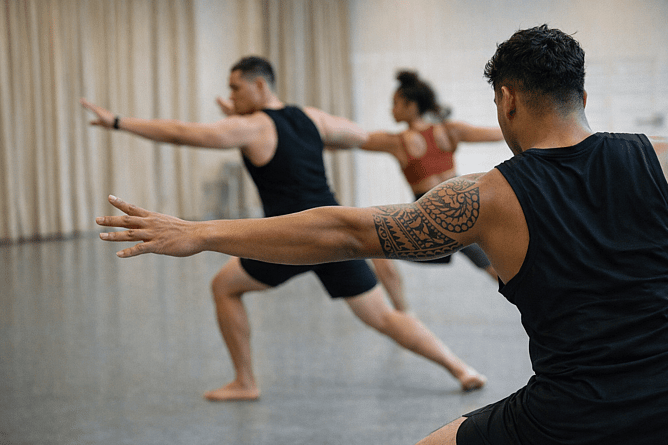
He was a gifted performing artist and dancer.
His imagination was rich. His creativity alive.
But when it came to reading, sitting still was so hard that his brain shut the experience down as a form of self-protection.
At Growing Choices, we often meet learners who have tried very hard to learn the “right” way.
They’ve sat still.
They’ve listened carefully.
They’ve repeated the work again and again.
And yet, meaning still feels just out of reach.
For some learners, this isn’t about motivation or effort. It’s about how their brain and body experience the world.
A body-based learner in a word-based world
Many people who experience dyslexia describe:
Blurry or moving words
Letters spinning or flipping
Words flying off the page or disappearing entirely
These sensory distortions can be so distressing that the brain chooses to blank out rather than stay overwhelmed. This is not failure, it is a safety mechanism.
For learners like this young man, the body often holds the key.
He travelled across the city by bus, and over a few days, worked with Claire on Davis® Orientation Counselling and focus tools that engaged his body, awareness, and perception. In just a short time, something shifted.
One day, he said quietly:
“The words are there now.
I can read. They are there now.”
What is kinaesthetic / embodied learning?
This story reflects what we see often at Growing Choices.
Some learners understand best when learning includes:
Movement
Hands-on tools
Physical creation (clay, drawing, building)
Rhythm and timing (music, drumming, dancing)
These learners: are often highly kinaesthetic with strong proprioception; have visual-spatial imagination and talent, are creative and imaginative. Their minds naturally move to learn, and often think in 3D images, even when the task requires 2D symbols like letters and words.
When learning ignores the body, these learners struggle.
When learning includes the body, meaning can finally settle.
Why sitting still doesn’t work for everyone
Many learning environments expect learners to:
Sit quietly
Listen first
Process information internally
For embodied learners, this can feel like trying to learn with an essential sense switched off. Their brains connect meaning through action, orientation, and awareness in space.
Proprioception - our sense of balance and sense of position in space, comes from tiny sensors in our muscles that signal to our brain. It is a strong sensory perception for dancers, drummers, performing artists - as is Kinaesthesia, which is more about the body learning through movement.
When movement is removed, comprehension can stall, not because the learner is unwilling, but because the learning pathway doesn’t match how their mind works and how their body learns. In my experience at a performing arts school, brainstorming for academic essays worked by 'dancing' the ideas, embodying the rhythm of the words and concepts, and moving them into paragraphs from there. It worked!
Reframing what we see
At Growing Choices, we gently challenge some common assumptions.
Movement is not:
A behaviour problem
A lack of discipline
A sign of poor attention
Movement can be a skill, a talent and an ability.
Have you heard the term 'active relaxer'? Movement can also be a sign that the brain is relaxing, calming, working to regulate, orient, and understand.
We teach self-regulation tools so movers can sit still comfortably when they need to or want to, but we also know that when the body is allowed to participate, learning often becomes calmer, clearer, and more meaningful.
A gentler way forward
When we honour embodied learning, the question shifts.
From:
“Why can’t this learner sit still?”
To:
“What does this learner need to access meaning?”
Sometimes, the answer is movement.
Sometimes, it’s tools that stabilise perception.
Sometimes, it’s understanding whether a task requires 2D or 3D thinking, and helping the learner place their mind accordingly.
And when that happens, learning often begins to feel possible again.
You are not alone
If this story resonates, you are not alone.
Many children, teenagers, and adults arrive feeling overwhelmed, misunderstood, or exhausted by years of trying to learn in ways that don’t fit.
At Growing Choices, these experiences can be explained, and with the right tools, they can be remediated. Confidence begins in learning how you learn.
Ways to begin
Free 30-minute Discovery Call
A relaxed conversation to explore what’s happening and whether support may be helpful.
Moving forward
There is no single “right” way to learn.
There are only different ways of accessing meaning.
At Growing Choices, we support learning that honours the whole person, mind and body together.