Looking at ADHD and Rejection Sensitive Dysphoria through a different lens
Lately, I've been thinking quite a bit about ADHD.
Perhaps it's because more and more people are talking about it. Parents are asking questions. Adults are recognising themselves in conversations they've never had before. It feels as though ADHD is everywhere at the moment.
I think that's a good thing.
The more we understand, the more opportunities we have to support children in ways that really make sense.
At the same time, I've found myself a little hesitant to talk about ADHD.
Not because I don't believe it matters.
Quite the opposite.
It's because I worry that we've started seeing ADHD as an identity rather than simply another way of experiencing the world.
Sometimes we hear,
"I can't do that because I've got ADHD."
And I wonder if that's really the whole story.
Looking through a different lens
One of the things parents often tell me is,
"My child just can't concentrate."
Then, almost in the same breath, they'll say,
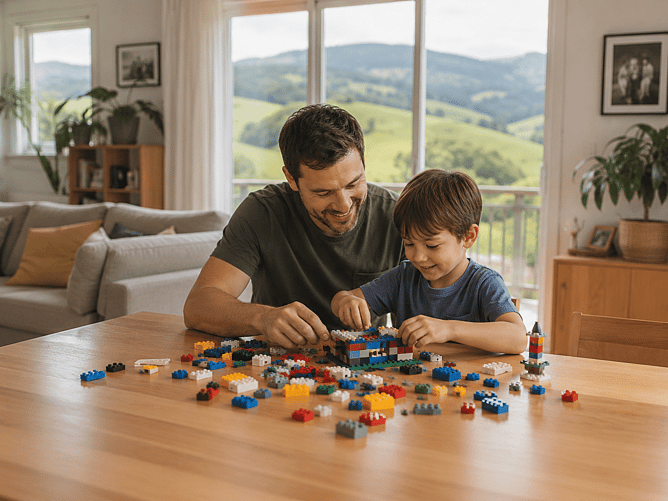
"But he can build Lego for four hours without stopping."
I usually smile.
Because they've just answered their own question.
Their child can concentrate.
It's just not working in the way we expect it to.
Sometimes they're completely absorbed in something they love.
Other times they're noticing everything that's happening around them all at once.
It's not that there's no attention.
It's that attention moves differently.
I've heard people describe this as attention variability, and I think that's a much kinder way of understanding what many children experience.
When we change the way we look at ADHD, we also begin changing the way we look at the child. How we respond changes, too.
The gift is often hiding inside the challenge
One of the things I've learnt over the years is that every learning difference brings strengths as well as challenges.
Children with ADHD often process many things at once.
They notice what other people miss.
They can think quickly.
They're often creative.
Curious.
Full of ideas.
I've met children who see solutions before anyone else in the room has even realised there's a problem.
Those are remarkable strengths.
The challenge is that those same children can also become overwhelmed when too much arrives at once or if they are required to sit still to learn and process information.
That's where I think understanding becomes so important.
Because if we only ever look at what a child struggles with, we'll miss the incredible abilities that are sitting right alongside those struggles.
When everything feels like it's happening at once
One of the ideas we use a lot at Growing Choices is orientation.
For me, orientation is about being connected to where you are, what you're doing, and what's happening around you.
When children are oriented, learning becomes much easier.
Their thinking settles.
They can organise ideas more easily.
They can move from one step to the next.
But when they're not oriented, it's a little like everything arrives at once.
I've seen children become frustrated because they want the whole answer immediately.
I remember one little girl saying to me that a bird's egg should simply become a bird.
She couldn't understand why it had to go through all the steps in between.
That conversation reminded me that many children aren't refusing to learn.
They're simply making sense of the world in a different way.
Once we helped her understand the idea and concept of sequence, everything began changing.
Sometimes it's not about trying harder.
Sometimes it's about understanding differently.
Why small comments can feel so big
Another thing I've noticed is that many children with ADHD feel things very deeply.
A teacher might gently say,
"Let's have another go."
A parent might simply say,
"Can you tidy this up for me?"
The words seem small.
But for the child, they can feel enormous.
You may have heard the term Rejection Sensitive Dysphoria, or RSD.
It's often used to describe the intense emotional pain some people experience when they feel criticised, rejected, or believe they've disappointed someone.
I think what's important isn't remembering the name.
What's important is understanding the experience.
Because once we understand that, we stop asking,
"Why are they overreacting?"
Instead, we begin asking,
"What happened for you just then?" and acknowledgement of how sequence can be tough: "Oooh that might have been a few too many steps to ask you to do all at once. How about doing the first few then we check in to see what is left to do."
That's a very different conversation.
It's about much more than emotions
One of the saddest things I see isn't actually the big emotions.
It's what can happen afterwards.
Some children begin believing they're different.
Some stop putting their hand up in class.
Some decide it's safer not to try.
Others become isolated because friendships become harder and harder.
Sometimes when parents come to see me, they tell me their child's biggest wish isn't to become a better reader.
It's simply,
"I wish I had a friend."
That breaks my heart every time.
Because every child deserves to feel that they belong.
There is another way
This is why everything we do at Growing Choices comes back to three ideas.
Orientation.
Identity.
Belonging.
When children become more oriented, the world begins making more sense.
When they understand how their own mind works, their identity begins to change.
Instead of thinking,
"There's something wrong with me,"
they begin thinking,
"This is how I learn."
And when that happens, belonging follows.
They begin trusting themselves.
They become more confident.
Their strengths have room to grow.
The ADHD brain is meant to be here
Perhaps that's the thought I'd like to leave you with.
I don't believe the ADHD brain is broken.
I believe it's meant to be here.
It brings ways of thinking that our world needs.
The goal isn't to change who children are.
The goal is to help them understand themselves. Also, claying and learning life concepts can really help them to think with the ideas of each concept. Once they learn a life concept like Change, Sequence or Time, then they can explore and experience those in real life - layering the concept into their identity naturally.
Because when children are oriented, are guided to fill in missing life concepts, and understand their strengths, they begin to feel they belong - and many of the challenges begin to soften.
And the wonderful abilities that were there all along have the opportunity to shine.
🌿 Could this be your child's experience?
If your child becomes overwhelmed by criticism, struggles to focus in some situations but can concentrate deeply in others, or you're wondering whether ADHD may be affecting the way they experience learning, a Learning Clarity Call is a gentle place to begin.
Together, we'll explore how your child experiences the world, discover the strengths that are already there, and consider practical ways to support them through the Growing Choices approach and the Davis Method.
Because every child deserves the opportunity to understand themselves, discover their strengths, and know that they truly belong.