If you’re a parent considering a Davis Autism Approach programme for your child, you may have lots of questions.
What actually happens during the programme?
What will my child be asked to do?
Will they need to sit still and listen?
What if they don’t want to participate?
Will I be involved?
And, perhaps most importantly, what will the experience feel like for my child?
It’s completely understandable to want to know what you’re stepping into before making a decision.
The Davis Autism Approach is individualised. Rather than following a one-size-fits-all programme, the work is shaped around the individual child or young person, their experiences, their needs and the areas they are finding difficult.
Here’s a look at what the programme journey can involve.
Here’s a simple look at what the journey can involve.

1. We start by understanding your child
Before focusing on particular challenges, we take time to understand the individual.
Every autistic person experiences the world differently. What may look confusing or challenging from the outside can make sense from their perspective.
We look at the whole person — not simply the difficulties they are experiencing.
Parents also have an opportunity to share what they are noticing at home, school and in everyday situations.
2. We explore how they experience the world
The programme looks at how the individual makes sense of their surroundings and experiences.
This may include exploring situations where they become confused, overwhelmed or uncertain.
Rather than simply asking, “How do we change this behaviour?”, we can begin by asking:
“What might be behind it?”
Understanding the experience can help us approach the situation differently.
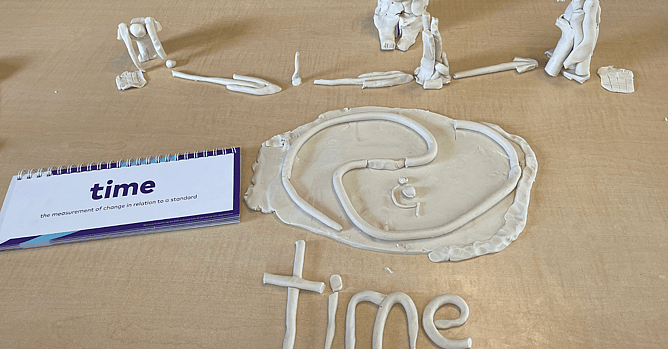
3. We use practical Davis tools and activities
The programme uses practical activities and Davis tools that are introduced according to the individual.
This includes learning self-regulation tools and working with concepts, creating and manipulating clay models, and exploring and experiencing ideas in their own context for meaningful learning.
The approach is active and hands-on rather than relying entirely on sitting and listening.
4. The programme is shaped around the individual
As each child works through the programme, the pace, activities and areas of focus can vary depending on the individual and what they need.
Some children may engage quickly with an activity, while others may need more time. Parents or caregivers are involved as I always say, 'they know their child best' and can often point something out or explain something that really supports the process.
The intention isn't to make a child become someone they're not.
It's about working with them and supporting greater understanding of experiences that may currently be difficult or confusing. The outcome is to participate more fully in life.
5. Parents can gain a different perspective
The programme can also give parents an opportunity to look at their child's experiences differently.
Instead of asking:
“Why won't they do this?”
you might begin asking:
“What might be making this difficult for them?”
That shift in perspective can influence how you respond to your child in everyday situations.
There is no one-size-fits-all journey
Every child is different, so every Davis Autism Approach programme will look a little different depending on age and context; and goals, hopes and dreams for their future.
The activities used and areas explored therefore depend on the individual.
That's why the first step is simply having a conversation about your child and what you're experiencing.
You don't need to have everything figured out before reaching out.
Want to learn more?
If you'd like to explore the Davis Autism Approach in more detail, visit the Davis Autism Approach programme page to learn more about what the programme involves.
If you have questions about whether it may be appropriate for your child, you're also welcome to get in touch with Growing Choices.
Understanding comes before teaching.