The Boy Who Could See Only Purple. That’s Right!
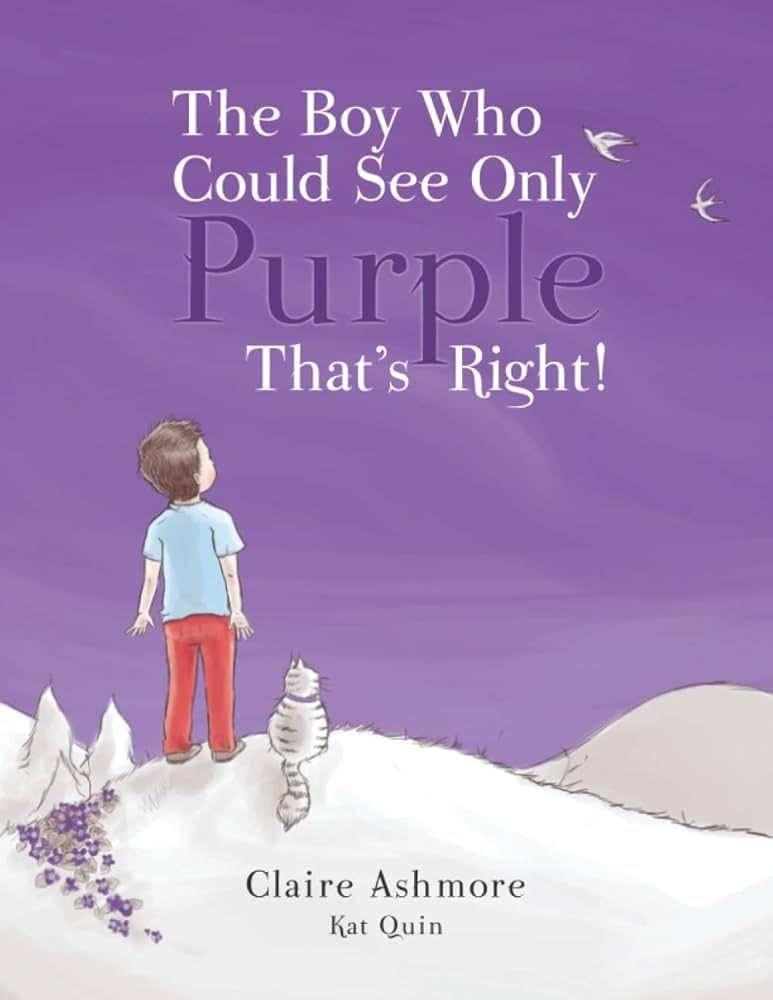

Milton reminds us to open our eyes and alert our ears; the story invites us to listen to the wind, to feel into life and feel connected
By Claire Ashmore, Illustrated by Kat Quin, Reviewed by Dr Roxanna Erickson Klein
It was immediately apparent to me that this charming tale was inspired by my dad, Milton H. Erickson MD. The author, who had been introduced to Erickson’s work through NLP training, confirmed this. Known for his creative approaches to mobilize unconscious resources, Erickson’s ideas fostered a change in the way professional psychotherapy is practiced. His work laid a foundation for the value of nurturing curiosity, self-acceptance and internal search coupled with unspoken suggestion. Decades after his death, Erickson’s work continues to influence a broad variety of positive, growth-oriented therapeutic directions. This story shows harmony of this process as joy of discovery transitions into healthy adaptive opportunities for ongoing exploration. That’s right, is it not?
This publication is the first in which the New Zealand team of author and artist have worked together; hopefully the first of many. Author, Claire Ashmore, is an educator with a background in vocational, grassroots and embedded literacy research and development. Her work as an elementary school teacher and later in English as a second language has developed her strength of presenting complex ideas in a straightforward manner. She describes this work as a resource for parents, teachers and therapists in support of helping children lead safe, peaceful and productive lives. When asked about future possibilities, Ashmore described ideas still on the drawing board– future children’s stories with equally important messages.
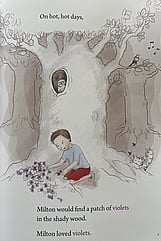
The artist with whom Ashmore partnered is Katherine Q. Merewether. Starting with Ashmore’s initial rough sketches, Merewether brought the story to life with line drawings that flow through the book matching the lightness of the text. The style is distinctly different from her previous publications as an illustrator of children’s stories. Throughout, the story’s economy of words is mirrored with deceptively simple illustrations.
A fanciful storyline illustrates the limitations each of us hold within, while illustrations draw out internal imagery to blend with images on the pages. Beautifully done line drawings punctuated with subtle washes of color show how limitations can alter perceptions. In a gentle way, the work shows how habitual patterns express themselves, and then models possibilities for growth beyond. The discrete transition into ongoing growth invites the reader, in unspoken words, to self-reflect and explore his or her own habitual margins. The direction of expectation, engagement, exploration and discovery become a pathway. Enrichment by sensory exploration generates new possibilities and appreciation for beauty of every day surroundings. It is all part of the story and of life itself.
The Boy Who Could See Only Purple, That’s Right! is an engaging story that exemplifies the unique artistry of Milton Erickson’s approaches. Dad would have found great pleasure in the imaginative way this tale welcomes the reader into the story with simp le words complemented by line drawings. The tale unfolds into a beautiful metaphor of the emergent process of self-awareness and discovery. Pleasant depth is revealed through the stillness of uncomplicated simplicity.
(From the Milton H. Erickson Foundation Newsletter Vol 31, #3)

Claire Ashmore
P. 021 145 5561
E. claire@growingchoices.co.nz
Cambridge